Free Shipping over $99! (most areas) Make Stunning Collages for Free! ✨ New: AI + Human Support is live! Click to chat in any language.



Proper textured wall art care is essential to preserving the unique tactile beauty and longevity of your favorite Veeart pieces. A Veeart textured piece is more than just a visual element—it is a tactile experience of depth, light, and shadow.
To ensure your artwork remains as vibrant as the day it arrived, understanding the fundamentals of textured wall art care is crucial. Our techniques are inspired by professional art conservation standards used by galleries worldwide. Whether you have chosen a piece from our Textured Wall Art Collection or a custom commission, this guide provides professional recommendations for maintaining the integrity of our signature textures.
1. Material-Specific Cleaning Protocols
When it comes to textured wall art care, the cleaning method depends entirely on the medium. Many of our pieces utilize the Impasto technique, which creates thick, layered textures that require specific handling.
Acrylic Texture
Characteristics: Durable and slightly flexible, but the surface can attract static dust.
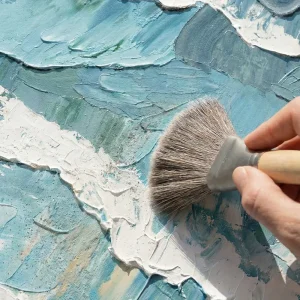
Cleaning: Use a soft goat-hair brush to sweep away dust. For minor marks, use a slightly damp microfiber cloth to gently dab the area.
Pro Tip: Avoid vigorous rubbing, as this is a vital part of textured wall art care to keep impasto peaks from flattening.
Plaster & Gesso Texture
Characteristics: Sophisticated and matte, but highly porous and brittle.
Strictly Dry Cleaning: Never use water or liquid cleaners. Plaster can absorb moisture instantly, leading to staining.
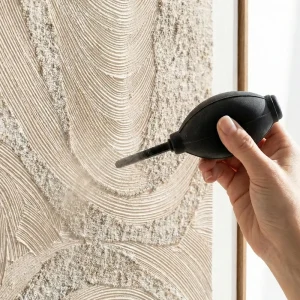
Dusting Technique: Use a manual air blower to dislodge dust from deep crevices. This non-contact approach is a fundamental part of your textured wall art care routine for delicate plaster works.
Mixed Media
Characteristics: May incorporate sand, fabric, or organic elements.
Dusting Technique: Use an air blower or a hairdryer on a strictly COOL setting from at least 30cm away to blow out trapped debris from complex surfaces.
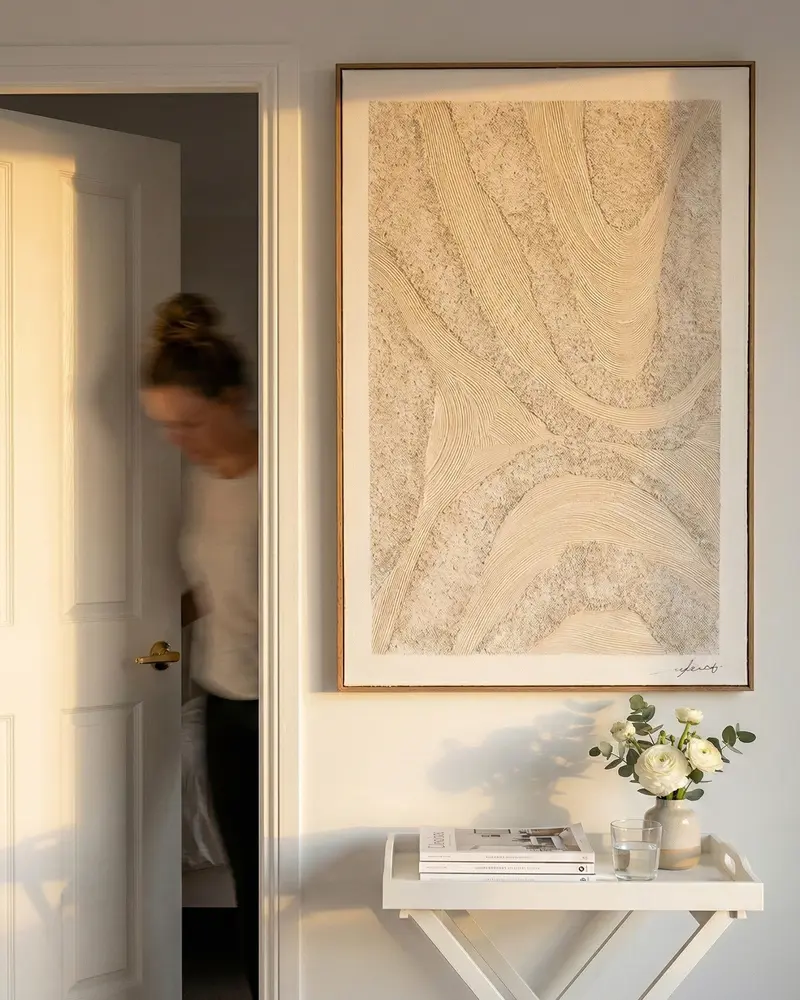
2. The Ideal Environment: Temperature Stability
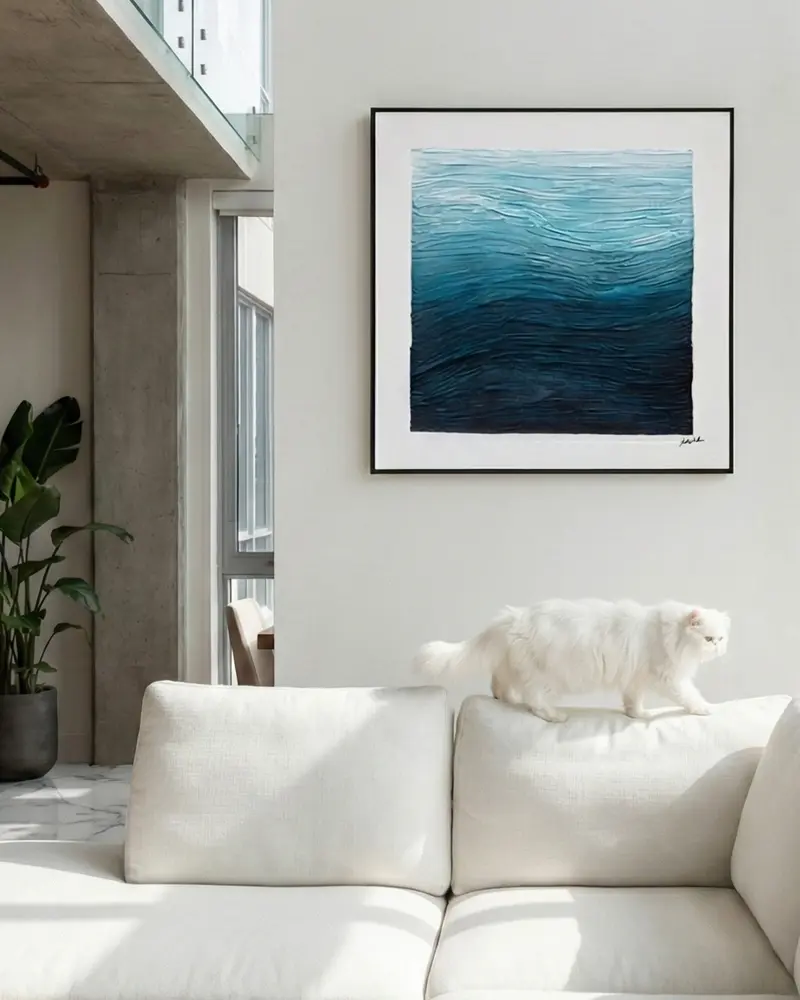
A key aspect of textured wall art care is preventive placement. The longevity of a painting depends heavily on its surroundings.
Light Control: Prolonged exposure to direct UV rays can cause pigments to fade. Position your artwork away from harsh, direct sunlight.
Constant Temperature: Maintaining a stable indoor temperature is vital. Do not hang your artwork directly in the path of air conditioning vents, heaters, or fireplaces. Rapid temperature fluctuations cause the texture layers to expand and contract, which can lead to cracking.
Avoid Grease: Keep textured pieces away from kitchen areas where airborne grease can settle into the ridges.
FAQ
Q: Can I use a vacuum cleaner on my textured art?
A: We do not recommend using a vacuum cleaner directly as the suction can be too strong for delicate impasto peaks. Instead, use a manual air blower or a soft brush.
Q: How often should I clean my textured wall art?
A: A light dusting every 2–3 months is usually sufficient to prevent dust build-up. For homes with pets or in high-traffic areas, once a month is recommended.
Q: What should I do if my plaster art gets wet?
A: Blot it immediately with a dry, lint-free cloth. Do not rub. Let it air dry naturally away from direct heat or sunlight. If staining occurs, please contact our customer service.