Free Shipping over $99! (most areas) Make Stunning Collages for Free! ✨ New: AI + Human Support is live! Click to chat in any language.



G'day! So you’ve just picked up some stunning ready to hang canvas wall art Australia or perhaps a unique piece of textured wall art Australia, but now you’re staring at a blank wall wondering where to start?
Most people just wing it, but if you want your home to look like a high-end display home in Sorrento or Toorak (checking out the latest Australian design trends at Vogue Living can give you even more inspo), you need more than just a hammer. You need a plan. To help you nail your next project, we’ve put together the guide on living room wall gallery ideas using the three hardcore rules of professional placement.
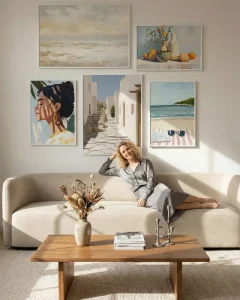
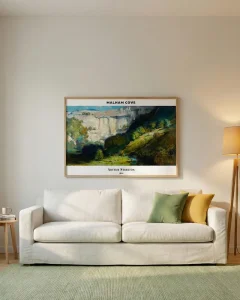
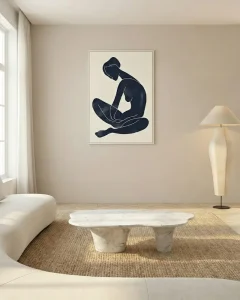
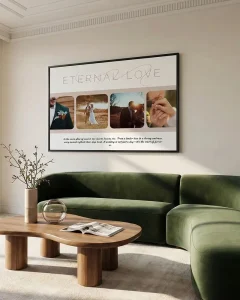
Rule 1: The 145cm Standard (Best Height to Hang Pictures in cm)
The biggest mistake Aussies make is hanging art way too high. Unless you want your guests to have a sore neck, you need to follow the museum standards for art height.
If you’re searching for the best height to hang pictures in cm, the magic number is 145 cm.
- The Method: Measure 145 cm from the floor to the centre of your artwork.
- Why it works: This is the average human eye level. It ensures your living room wall gallery ideas feel grounded and inviting rather than floating off into the ceiling.
Rule 2: Connection is Key (How to Hang Canvas Art on Wall)
A common question is how to hang canvas art on wall when there is furniture beneath it. Art shouldn't just be "on the wall"; it should relate to what’s below it.
- The 15-20cm Rule: Hang your frames roughly 15–20 cm above your sofa, sideboard, or console.
- The Visual Link: If you hang it too high, the art and furniture look like they’re having an argument. Keeping them close creates a cohesive "visual unit" that looks professional and intentional.
Rule 3: The 2/3 Balance Rule
Size matters, especially with ready to hang canvas wall art Australia. A tiny frame over a massive modular sofa looks out of place.
- The Ratio: Your art (or your entire gallery set) should span roughly 2/3 of the width of the furniture beneath it.
- Pro Tip: This rule ensures perfect visual balance and scale, which is the secret to a professional-looking space. It allows the art to make a statement without overwhelming the room or looking like an afterthought.
The Essential Tool: High-Quality Picture Hanging Hooks
Even with the best living room wall gallery ideas, your project will fall flat if the frames are wonky or leaning forward. Traditional nails often fail with heavy textured wall art Australia.
For a truly "better than professional" finish, you need specialised picture hanging hooks. We recommend using an Australian-patented system designed for a flush, secure fit:
👉 VeeArt Professional Picture Hanging Hooks
This system is a game-changer for Aussie homeowners because it offers:
- Flush Wall Mounting: No more annoying gaps between the frame and the wall.
- Auto-Leveling System: Even if your drill bit slipped a millimetre, you can adjust it to be perfectly level.
- High Weight Capacity: Perfect for those heavy, ready to hang canvas wall art pieces.
Frequently Asked Questions (FAQ)
What’s the best way to hang heavy canvas art?
If you’ve invested in a substantial piece of textured wall art Australia, don’t trust a cheap sticky hook. For heavy items, you need heavy-duty picture hanging hooks that are rated for the weight. The VeeArt system is designed to handle high weight capacities, ensuring your art stays on the wall and doesn't end up on the floor in the middle of the night!
Can I use these rules for family photos and traditional frames?
Spot on, you absolutely can. While we've talked a lot about canvas, these rules are just as vital for your personal photos and framed prints. Whether it’s a small 4x6 or a massive framed wedding photo, sticking to the 145 cm centre rule and the 2/3 width ratio ensures your personal memories look like a curated exhibition rather than a random clutter of frames.
How do I maintain my textured wall art Australia?
Textured wall art Australia is stunning but can be a bit of a dust magnet. To keep it looking fresh, skip the wet cloth (which can damage the paint or plaster) and use a soft, dry microfibre cloth or a gentle feather duster. It’ll keep those textures popping for years to come.